
October 4th, 2026 | Pastor Russ Smith | 6 Minutes
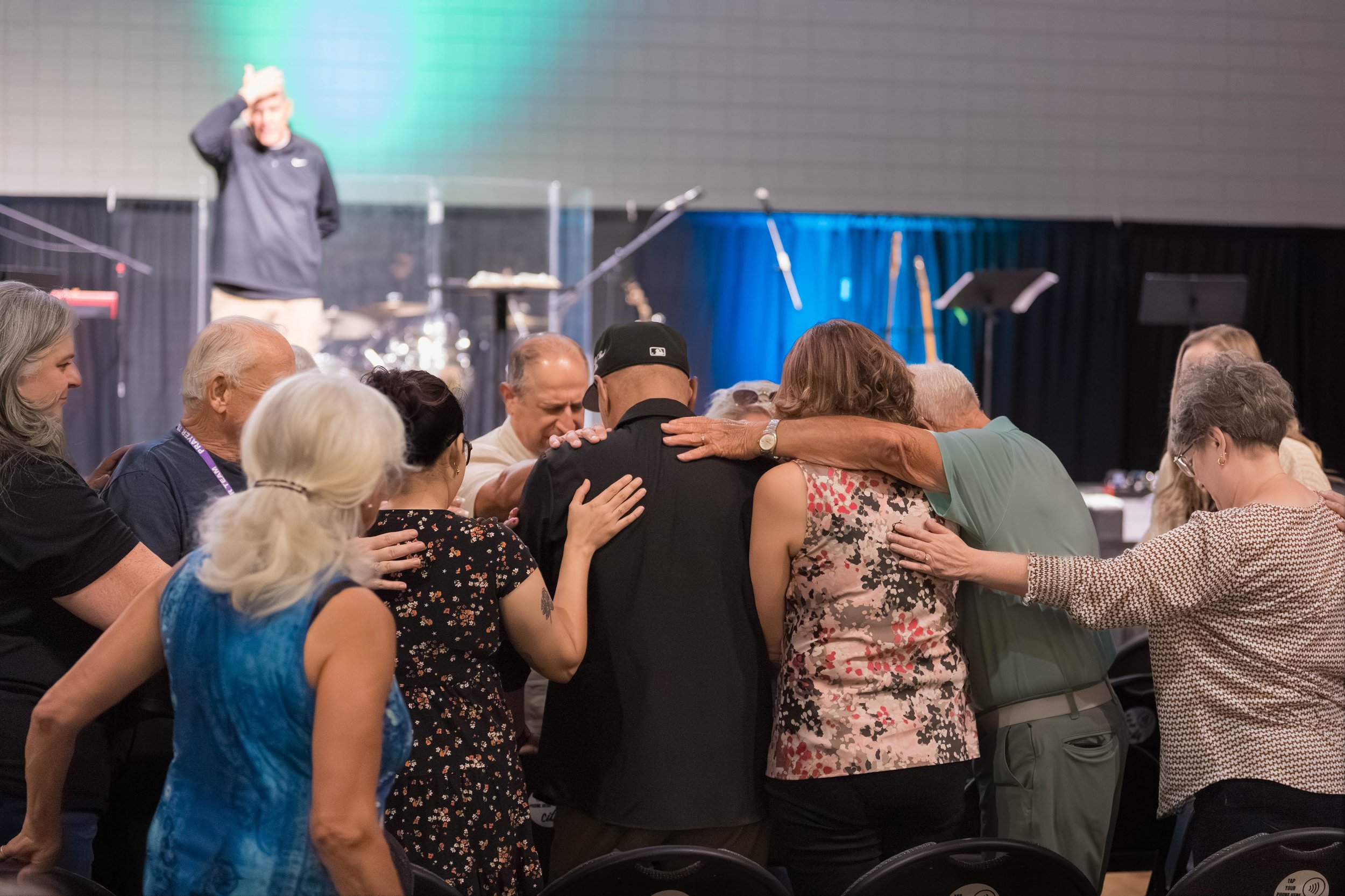
Pain and disappointment have a way of changing our perspective. Past hurts can affect how we approach relationships, and difficult experiences can make us hesitant to trust again. Even as followers of Jesus, we may find ourselves struggling to move beyond something that happened to us.
In Mark 8:22–26, Jesus encounters a blind man whose healing unfolds differently than we might expect. After Jesus first touches him, the man begins to see, but his vision remains unclear. Jesus touches him again, and his sight is completely restored.
This account raises an important question: What do we do when we've encountered Jesus, but the healing we're asking for still feels incomplete?
Healing is not a formula
Throughout the Gospels, Jesus heals people in different ways. As Pastor Russ explained, Scripture doesn't provide a guaranteed sequence of steps we can follow to produce a miracle. If it did, we might begin placing our confidence in the process rather than in Jesus Himself.
Consider what happens in Mark 8. Jesus takes the blind man by the hand, leads him out of the village, and touches his eyes. When Jesus asks what he can see, the man explains that he can see people, but they look like trees walking around.
Something has changed, but his healing isn't complete.
What stands out about this encounter is how Jesus responds. He doesn't criticize the man for his incomplete vision or suggest that he should be satisfied with what he has received. Instead, Jesus touches him again, and the man's sight is fully restored.
The significance of this passage isn't that we've discovered a method for receiving healing. It's that the compassion of Jesus isn't exhausted by our continued need.
For someone struggling with physical illness, emotional wounds, bitterness, addiction, or another unresolved difficulty, this is an important distinction. We can acknowledge that healing is still needed without concluding that Jesus has stopped caring.
Our responsibility isn't to manufacture a particular outcome through the right sequence of actions. We can continue bringing our needs before Jesus, trusting His compassion even when we don't fully understand the process.
Let people lead you to Jesus
The account in Mark 8 begins with a group of people bringing a blind man to Jesus and asking Him to heal him. We aren't told their names, how far they traveled, or what responsibilities they may have set aside. We only know that they recognized someone in need and took action to help him.
Pastor Russ emphasized that this should characterize the culture of the Church. When someone is struggling, our response shouldn't be indifference or avoidance. We should be willing to walk alongside them and help them seek Jesus.
But this requires something from the person receiving help, too: a willingness to acknowledge their need.
Some of us have become so accustomed to caring for others that we've forgotten how to receive care ourselves. We're quick to respond when someone needs assistance, yet when asked how we're doing, our automatic response is, "I'm fine."
What would happen if we were more honest with one another?
During the service, Robert and Tammy shared their testimony of navigating open-heart surgery, a heart transplant, and, most recently, a kidney transplant made possible through Tammy's donation. Their journey involved years of medical challenges, uncertainty, and opportunities to exercise their faith.
They also spoke about the care they received from their church family: meals, transportation to appointments, financial assistance, and consistent prayer.
Their testimony demonstrates something important about Christian community. We weren't created to navigate life's difficulties in isolation. We need people who will pray with us, encourage us, and help us continue following Jesus when the journey becomes difficult.
Trust the One who is leading you
Before Jesus heals the blind man, He takes him by the hand and leads him out of the village.
Consider the man's position. He cannot see where they're going, recognize the obstacles ahead, or determine the route for himself. He has to trust the person leading him.
Pastor Russ highlighted an important detail: before the man experiences his healing, Jesus is already leading him in the right direction.
We often approach God with a willingness to follow, provided we understand where He's taking us. We want to know the outcome, the circumstances, and what the journey will require before surrendering control.
But trusting Jesus means recognizing that we don't always have that information.
This doesn't mean denying difficult circumstances or pretending they don't exist. Pastor Russ specifically cautioned against allowing a medical diagnosis to define our identity or determine everything we believe about ourselves.
The diagnosis may be real. The uncertainty may be real. But neither means Jesus is absent.
We can trust the One leading us even when we cannot clearly see where He's taking us.
Be honest about what is still blurry
When Jesus asks the blind man what he can see, the man gives an honest answer. He can see people, but they look like trees walking around.
He doesn't pretend that his vision has been completely restored. He acknowledges what has changed while recognizing what still needs healing.
How often do we struggle to do the same?
Perhaps we've prayed about a difficult relationship but still carry bitterness. Maybe we've experienced progress in overcoming an addiction, yet the temptation remains. Or perhaps we've asked for physical healing, received prayer, and are still waiting for something to change.
There's a temptation to settle for "close enough" or to convince ourselves that we shouldn't need prayer again.
Yet the blind man's honesty is followed by another touch from Jesus.
Pastor Russ encouraged the congregation to continue asking, seeking, knocking, and receiving prayer. There is no shame in acknowledging that we're still struggling. Asking for prayer again doesn't mean we have failed.
But healing also calls us to consider how we're living.
Toward the end of the passage, Jesus instructs the man not to return through the village on his way home. Pastor Russ connected this instruction to the changes that must take place when we choose to follow Jesus.
He illustrated this with the picture of a lion. We might admire a lion from the safety of a zoo, but finding one sitting on our couch would require us to change everything about how we live.
His point was that we can appreciate what we know about Jesus without allowing His presence to change our lives.
Following Jesus requires more than admiration. It requires obedience.
That includes the words we speak, the habits we maintain, and the ways we think about ourselves and others.
Ephesians 4:29–30 instructs believers to speak what builds others up and warns against grieving the Holy Spirit. As Pastor Russ observed, the first person who hears the words coming out of our mouths is often ourselves.
We should consider whether our words reflect the truth of who God is and what He's doing in our lives, or whether we're continuing to speak condemnation, bitterness, and defeat.
Receiving another touch from Jesus also means being willing to follow Him in a different direction.
Common questions about healing
Why doesn't the Bible provide a step-by-step formula for healing?
The Bible isn't intended to be a guide for getting everything we want from life. It is the inspired Word of God, revealing who He is through the person of Jesus.
When studying what Scripture teaches about healing, our focus should be on the One who heals rather than searching for a guaranteed process.
The source of healing is Jesus (1 Peter 2:24; Isaiah 53:5; Psalm 103:2–3).
Does asking for prayer again mean the first prayer failed?
No. Prayer is an expression of faith, and faith requires trusting God even when we cannot see or fully understand what He's doing.
We believe God is good, that He desires to heal, and that He loves us. However, we don't always understand His plans or timing.
Perhaps God is strengthening our faith through prayer. There may be areas of sin that need to be addressed, circumstances beyond our awareness, or a season in which we must continue waiting and trusting Him.
Whatever the situation, we are encouraged to continue asking, seeking, and knocking in prayer (Matthew 7:7).
Returning for prayer isn't an admission of failure. It's an opportunity to continue placing our trust in Jesus.
Does faith require me to ignore or deny a medical diagnosis?
No. God has given humanity the ability to study and understand His creation through fields such as science and medicine.
Christians should carefully consider information provided by reputable medical professionals, remain informed about their health, and seek additional medical guidance when necessary.
At the same time, we recognize that medical knowledge is practiced by people and therefore has limitations. A diagnosis provides important information, but it doesn't have to become the foundation of our identity or the source of our hope.
We can take medical concerns seriously while continuing to pray, trust God, and seek His will without allowing fear or anxiety to consume us (Matthew 6:25–34).
What role does Christian community play in healing?
The people surrounding us can influence how we navigate difficulty, respond to disappointment, and maintain our faith.
A healthy Christian community provides opportunities for prayer, encouragement, practical assistance, and meaningful relationships.
Scripture describes the Church as the body of Christ. When one part suffers, the rest of the body responds with care. We're called to carry one another's burdens and support one another as we grow in faith.
That means remaining present when someone is struggling and being willing to receive support when we are the ones in need.
(1 Corinthians 12:12–26; James 5:16; Galatians 6:2; Ecclesiastes 4:9–12; Matthew 18:19)
Can healing include emotional, mental, relational, and spiritual needs?
Yes. The healing Jesus offers isn't limited to physical conditions.
Christ came to address the problem of sin and its effects on humanity. Those effects reach into every area of life, including our emotional, mental, relational, spiritual, and physical well-being.
Throughout the sermon, Pastor Russ encouraged people to seek Jesus for healing in all these areas rather than assuming that certain struggles are beyond His concern.
In Christ, we find the source of restoration and wholeness (Isaiah 1:18).
Put it into practice
Identify one physical, emotional, relational, or spiritual need in your life that still feels unresolved.
This week, share that need honestly with a trusted believer or someone on the church's prayer team. Explain what you're struggling with and ask them to pray with you.
Don't allow embarrassment, disappointment, or the belief that you've already asked too many times to prevent you from seeking prayer again.
Remember that receiving prayer isn't a sign of failure. It's an act of faith and a willingness to acknowledge our continued dependence on Jesus.
Come back for another touch
The account in Mark 8 reminds us that we don't have to pretend everything is clear when it isn't.
We can acknowledge the progress we've experienced while remaining honest about the areas where healing is still needed. We can allow others to walk alongside us, trust Jesus when the road ahead is uncertain, and respond obediently when He calls us to change.
Most importantly, we can continue coming to Him.
Pastor Russ reminded the congregation that our needs have never exhausted the compassion of Jesus. Whatever disappointment we experienced yesterday doesn't have to determine how we respond to Him today.
If something in your life is still blurry, don't settle for pretending you can see clearly.
Come back to Jesus. Ask for prayer again. Trust the One who heals.
Watch The Full Sermon
Want to explore this teaching more deeply? Watch the complete message from City Church of Surprise on YouTube.
Need Prayer?
Whatever you’re facing, you don’t have to walk through it alone. Our team at City Church would love to pray with you.
